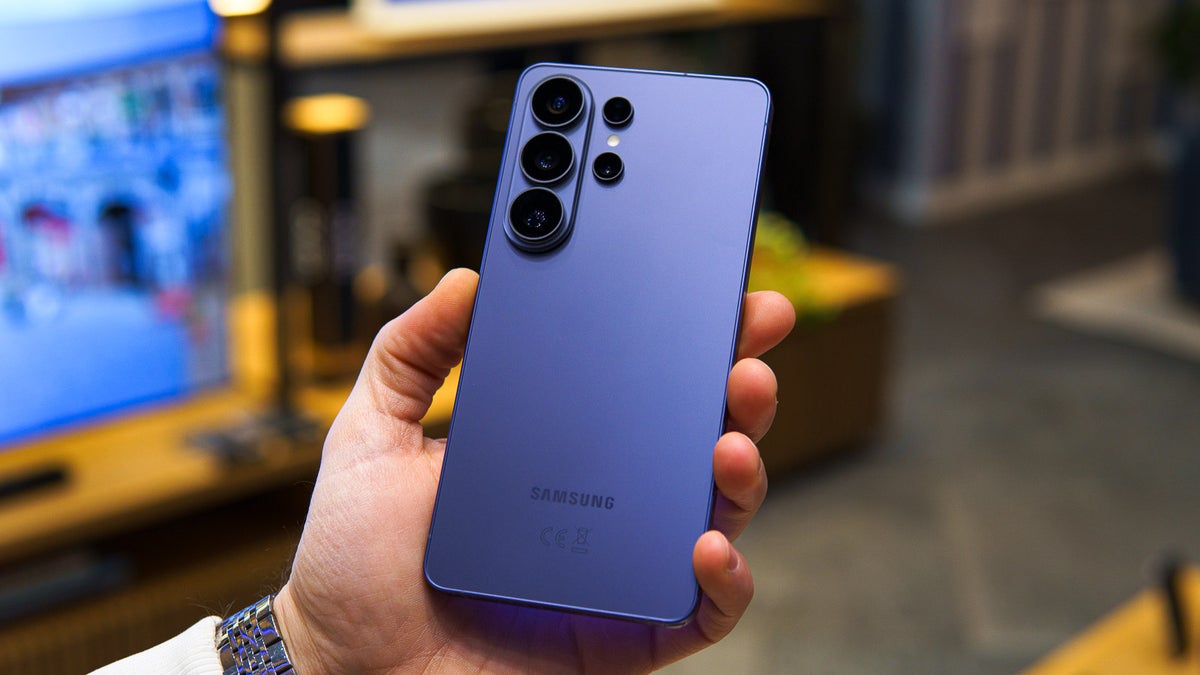
Big batteries in Samsung phones feel like a dream come true
Before I get into the details of the latest report, allow me to explain why Samsung ships its phones with an average battery capacity. You see, Samsung smartphones feature lithium-ion batteries, which are very safe and highly reliable. However, a big issue with them is that if you try to increase their capacity, it will automatically make them thicker. Considering how important a thin design has become in modern smartphones, I believe that would be the last thing the brand will think to do.Silicon-carbon batteries, which are currently used in Chinese smartphones, can pack more mAh while maintaining the same form factor as a regular lithium-ion battery. However, it's still new tech, and Samsung apparently doesn't want to go all in on it before putting it through some rigorous testing. The South Korean giant must have set very strict standards for adopting new technology (especially when selecting a new battery tech) following the Galaxy Note 7 fiasco with exploding units.
All that said, Samsung might finally be thinking of using silicon-carbon batteries. A recently leaked internal test report on X reportedly suggests that 12,000 mAh, 18,000 mAh, and 20,000 mAh batteries built on this latest tech are being tested. The 12,000 mAh battery consists of two cells, one of 6,800 mAh (4.7 mm) and the other of 5,200 mAh (3.2 mm), stacked together.
The report suggests that the tech giant wants the overall thickness of this battery to be under 9.3 mm. However, in testing, 2 out of 7 samples exceeded this limit. The 18,000 mAh battery features three cells stacked together: a 6,699 mAh (4.2 mm) cell, a 6,000 mAh (3.9 mm) cell, and a 5,257 mAh (3.28 mm) cell.
For this battery capacity, the aimed thickness is approximately 12.3 mm. However, the test samples exceeded the limit and reached 12.8 mm. This reportedly happened because of the thermal interface layers between all three cells. The report further notes that the way the three cells are stacked together is being reworked to achieve the target thickness.
While the latest leak doesn't mention the exact cell capacity of the 20,000 mAh battery, it was previously reported that it features two cells: 12,000 mAh (6.3 mm) and 8,000 mAh (4 mm). What the new leak does highlight is that it reportedly failed after 960 charge cycles. For reference, any modern lithium-ion battery can easily survive 500 to 1,000 cycles. That being said, Samsung expects the other two batteries to offer at least 1,500 charge cycles before dropping to 80% capacity.
Do you think battery life is the biggest weakness of Galaxy phones today?
Don't ruin everyone's hope this time
Samsung SDI is testing 12K, 18K mAh Si/C cells. The 20K failed at 960 cycles. Race is on. Full PDF available, Samsung tracking system didn't work much. Anyways it's not free. pic.twitter.com/D8NDy4weNw
— Schrödinger (@phonefuturist) March 9, 2026
I believe a 6,699 mAh cell with a thickness of 4.2 mm could be the right choice for next year's Galaxy flagship. However, it's worth noting that there were also rumors before this year's Galaxy Unpacked event that the Ultra model would come with a Si-C battery.
Unfortunately, that didn't happen. That's why I highly recommend taking the current leak with a grain of salt, as it hasn't come from any Samsung official. Hopefully, testing of the new tech batteries will be completed before the launch of the S27 series, and all the phones in the lineup will comparatively offer more battery capacity than their respective predecessors.