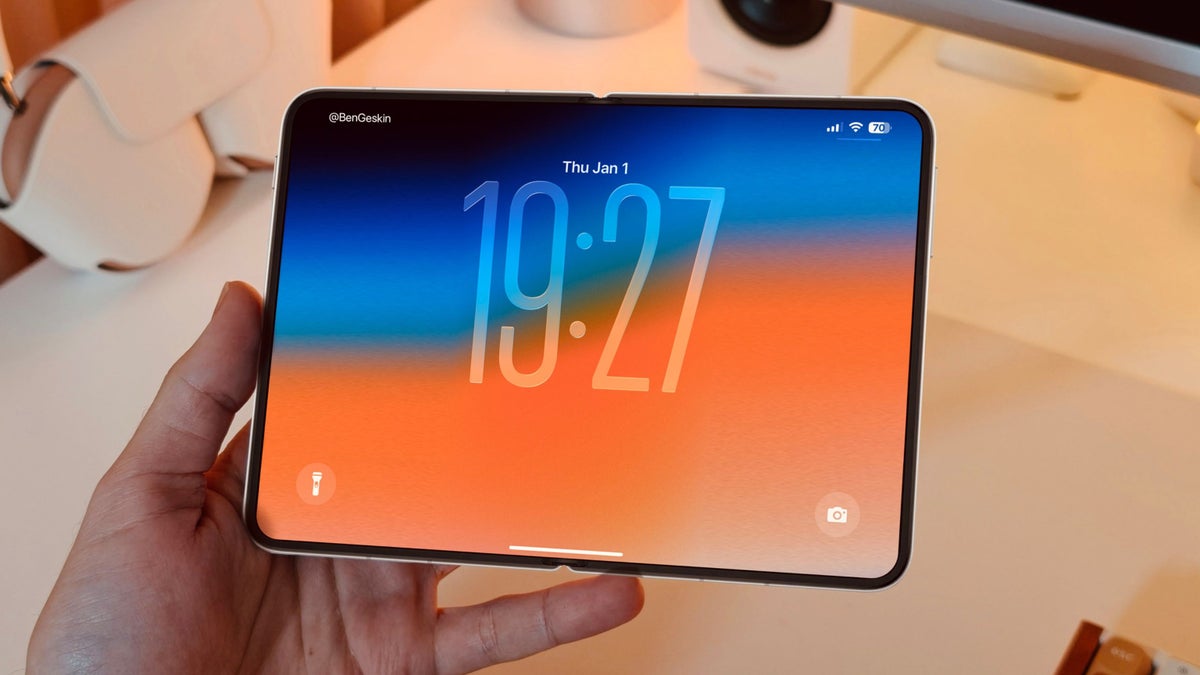
The almost mythical
foldable iPhone has been a long time coming, with details of how the
Apple flagship will look only having come out some time back. Now, at long last, more details have emerged about how the phone will run iOS apps and how the company has decided to integrate cameras into its most innovative iPhone model ever.
Foldable iPhone iOS app support
As has been suspected for quite a while, Apple’s intention with the
foldable iPhone’s unorthodox wide-folding design is to make it resemble an iPad, according to a new
report (
subscription required). This doesn’t mean that the phone will be running iPadOS or support iPad apps out of the box, however, but that the company is overhauling how iOS itself will work on its foldable flagship.
For example, iOS apps are being redesigned to feature a layout akin to iPad apps. Apple is introducing side bars into iPhone apps, which will only be present on the internal display of the
foldable iPhone. Apps will function more or less the same as on a traditional iPhone when viewed on the external display of the foldable.
Multitasking is, naturally, being brought to the
foldable iPhone as well. However, the experience is being kept a lot simpler than the one found on an iPad. Apps will be able to run side by side on the internal display and developers will likely redesign existing iOS apps for a better landscape experience on the
foldable phone. However, the more complex layout of iPadOS is not being adopted here.
Cameras on Apple’s foldable phone
Apple apparently tested an under-display camera for the main internal display before deciding to use a punch-hole design instead. The former’s decrease in photo quality was deemed unacceptable for the time being, a conclusion that Samsung came to as well when it designed the excellent
Galaxy Z Fold 7.A punch-hole will also be found on the smaller external display for the front camera. Though the Dynamic Island cutout is gone, notifications and app interfaces will still expand the punch-hole design into a Dynamic Island layout. On the rear of the
foldable iPhone, there will only be two cameras and the camera island will likely resemble the slimmer design found on the
iPhone Air.As has been reported before, Apple has had to abandon Face ID for the
foldable iPhone because the chassis was too slim to accommodate it. Instead, users will find that the company has reintroduced Touch ID into the button found on the side of the phone.
What about the crease and durability?
Of course, Apple took years to even consider entering the foldable smartphone segment because it believed that durability and display creases were huge concerns. The company initially wanted to eliminate the crease entirely, but this has reportedly not been possible. Perhaps Apple will use
Samsung’s crease-free foldable display for its next folding phone.Instead, the company has used one of the most advanced foldable displays and hinges that the smartphone industry has ever seen. According to one recent
report (
translated source), the display crease on the
foldable iPhone will be shallower and visibly flatter than current Chinese
foldable phones. This may or may not include the new Oppo Find N6, which seems to have no crease at all at first glance.The hinge that the
foldable iPhone is using is also said to be very durable, though exact figures for how many times it can be opened and closed are unknown. Apple apparently wanted to make movie and video viewing experiences better on the
foldable iPhone than on its traditional phones, and it might have just succeeded with the almost-invisible crease.This display and the new ways that apps will function — let alone the hardware powering this phone — mean that Apple’s first foldable flagship will cost $2,000 or more. According to earlier reports, the company aims to market the
foldable iPhone as one of
Apple’s new Ultra products and a step up from the
iPhone 18 Pro Max.